This is DEAD serious: http://www.facebook.com/photo.php?v=10150346715182550
This is DEAD serious: http://www.facebook.com/photo.php?v=10150346715182550
Young persons who are placed in positions where they have to lead older persons consistently complain about the challenges that they face. Getting acceptance can be a drain on their productivity and the performance of the team.
Case studies of young persons being given the responsibility to lead their elders suggest that relying on Dominance and Influence as their preferred leadership style produced positive results.
A “I am just another member of the team” S-style approach seems to backfire as some elements who thought that they should have been given the position put up resistance. Others demand that the young leader earn their respect.
The C-style resort to using the authority of the position to get compliance fails to get the buy-in that makes all the difference in highly successful teams.
So, a demonstration of a willingness to use an iron fist carefully integrated with friendly outstretched arms seems to work best.
Worry is usually triggered by receipt of new information. We process the incoming information in a way that prompts us to be concerned about the future. That in turn can translate into varying degrees of worry.
What if the information that triggered our concern was delayed? Would we worry about it the situation? Not at all.
Many persons would have had a chance to put away their worry beads during the BB Blackout.
 This situation should give us pause to recognize that worry is a choice that we make. If we can have fun because we are unaware of the situation, it is not the event that causes worry. Rather it is what goes on in our heads. Worry then is a function of what goes on in our heads. That means that we have control over whether we worry or not.
The key is how we process incoming information. Learning to put a positive spin on new developments is a great antidote to worry. The key is to envision blue skies in the end.
A strong faith-based outlook is the ultimate antidote to worry.
The army readies for battle.
The General commands the drummer to beat the “Attack” rhythm.
The army advances and suffers heavy losses.
The General commands the drummer to beat “Retreat”.
The drummer continues to beat “Attack” despite the General’s desperate shouting for “Retreat” to the played.
In tears the drummer confesses: “Attack is all I know General. They never taught me Retreat.”
Happy ending: The army continues to push forward to the beat of “Attack” and overcomes the enemy.
Discard “Retreat” from your playlist so that “Attack” will be all that you know. When the chips are down and defeat stares you in the face – attack.
Attack – doubt.
Attack – fear.
Attack – with a clarity of purpose and thought.
Attack – with a carefully crafted plan of action.
Attack – with the goal in mind.
Attack – with God as your leader!
Hope is said to spring eternally in the human breast.
I am concerned that I notice that the level of my positive expectations is greatly increased when I am able to see some solution to the issue at hand for myself.
That does not tie in with what I understand “blind faith” to mean.
How does one learn to be full of joy in the face of calamity when they cannot even imagine a way out?
That is true Faith. That is the level of spiritual maturity to which I aspire.
One important step is to accept that God has promised to care for His people and He always keeps His promises. Consequently, whatever the outcome, it will be best for us in God’s plans.
Rom 8:28 We know that in all things God works for good with those who love him, those whom he has called according to his purpose.
 Which of these couples would you figure should be given the title “Most likely to Succeed?’
http://www.facebook.com/note.php?note_id=292144317462398
There is a school of thought that anything but strong, dominant leadership limits the chances for success.
Jim Collins – “Good to Great” suggests that sustainable success has been achieved by a more consultative, S-style leadership.
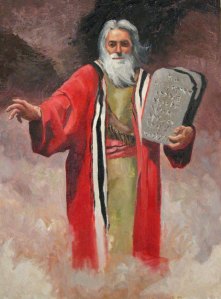
However, case studies like Moses and Aaron and the outcomes of their action tend to prolong the debate about the value of dominance as a leadership strategy.
Moses’ Dominant-style seems to have worked better in getting “followers” to remain true to the game plan than Aaron’s Influencer-style. Aaron allowed the people to talk him into allowing them to create man-made Gods.
On the other hand, Moses showed strength and firm leadership to put down the Dathan, Abiram rebellion.
Does that make the D-style “better”? No, each style works best in given situations and terribly in others.

Feelings of depression, self-doubt, lack of direction and demotivation seem to abound internationally. There seems to be a global consensus that these are bad times. There is no hesitation to express concerns about our present state of affairs.
This article from BNET: “6 Signs You’ve Lost Faith In Yourself – And How To Get It Back” is the precise medicine for the malaise from which we are suffering. This is a must read.
“The hands that rock the cradle rule the world.”
The majority of care givers and early childhood practitioners have a preference for the Reserved/People Oriented or S-Style behaviour.
It means that the persons responsible for the socialization process in the critical early stages bring a conservative and risk-averse philosophy to the task.
Examples of S-Style mantra include:
“One thing at a time and that done well”. This flies in the face in the demand for multi-tasking in the rat race world in which we live.
Another favourite is: “When a job has been begun, never leave it till tis done.” One would need to have the uncanny skill to start the most important job all the time and that it remains the most valuable use of your time throughout the completion process.
S-style behaviour in the D-I-S-C Framework is the counterpoint to adventurous characteristic of the D-style – Steadiness versus Dominance.
Does S-Style socialization dampen entrepreneurial fervor? What are your thoughts?
 TrevorESSmith