Embarrassment Exposed!

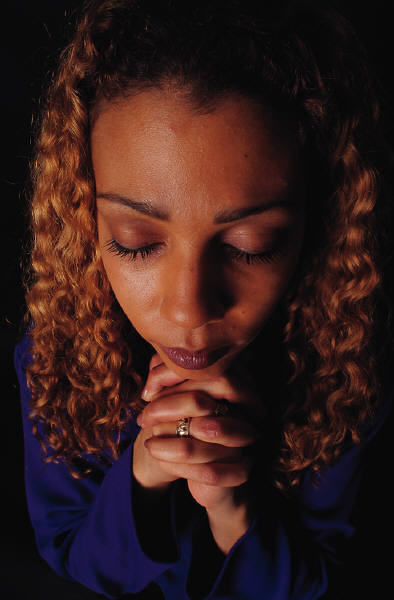
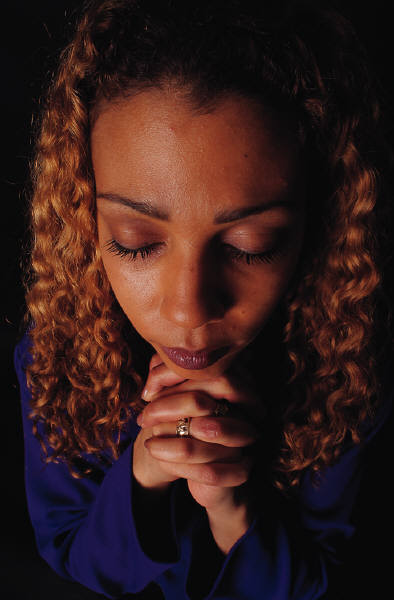
Nobody likes to experience embarrassment. Yet, it seems to be part of the reality for most of us.

Embarrassment impacts some people more than others. Some individuals with self-esteem challenges actually curtail interaction with others so as to avoid experiencing embarrassment.

One common error with respect to embarrassment is the notion that someone can embarrass you. We say to our children, “Don’t embarrass me in public!”

The reality is that embarrassment takes place when what is revealed is not in keeping with the image we try to or want to present.

The child’s unruly behavior causes us to choose to be embarrassed because we would like to portray the image of a parent who is able to properly discipline our children. If that were to be true then the episode would not be occurring or would it?

If we accept the reality that our kid behaves in this socially unacceptable way in private and in public then we are faced with another reality. If further, we accept that we are at our wits end working to correct this behavioral issue, then we are better served by seeking help than by being embarrassed. Being embarrassed reflects a sense of “Oh, no! I have been found out.” It produces a sense of shame.

There is a subtle difference between accepting the need for corrective action and being embarrassed – feeling ashamed.

For example, one parent will use the temper tantrum display to reinforce their commitment to getting help if necessary to correct the behavioral challenge.

The parent who chooses the route of embarrassment, either puts on a sheepish grin and beats a hasty retreat or enters into a stern attempt at discipline that is more designed to save face than to achieve any sustainable behavior modification in the child.

When our reality is not what we want others to know, we feel embarrassed. If we are comfortable with “what is” then we feel no discomfort when it is exposed. This relates to our financial situation being shown to be less stable than we would like others to know. Or, our actions being out of step with the value system that we claim to live by.

For example, the professing Christian who is caught in a blatant lie often chooses to be embarrassed. A more useful response would be to recognize the failing and to pray for guidance in avoiding future occurrences.

The so-called “expert” whose competence is found wanting can choose to be embarrassed or can view the incident as a wake-up call to go and get the requisite training.

The next time you feel embarrassed, spend a moment in reflection to identify what reality has been exposed that is not in sync with the image that you would like to portray. Make a commitment to correct the situation.

BB Black-out Stems Worry

Worry is usually triggered by receipt of new information. We process the incoming information in a way that prompts us to be concerned about the future. That in turn can translate into varying degrees of worry.

What if the information that triggered our concern was delayed? Would we worry about it the situation? Not at all.

Many persons would have had a chance to put away their worry beads during the BB Blackout.

This situation should give us pause to recognize that worry is a choice that we make. If we can have fun because we are unaware of the situation, it is not the event that causes worry. Rather it is what goes on in our heads. Worry then is a function of what goes on in our heads. That means that we have control over whether we worry or not.

The key is how we process incoming information. Learning to put a positive spin on new developments is a great antidote to worry. The key is to envision blue skies in the end.

A strong faith-based outlook is the ultimate antidote to worry.

Hope

Hope is said to spring eternally in the human breast.

I am concerned that I notice that the level of my positive expectations is greatly increased when I am able to see some solution to the issue at hand for myself.

That does not tie in with what I understand “blind faith” to mean.

How does one learn to be full of joy in the face of calamity when they cannot even imagine a way out?

That is true Faith. That is the level of spiritual maturity to which I aspire.

One important step is to accept that God has promised to care for His people and He always keeps His promises. Consequently, whatever the outcome, it will be best for us in God’s plans.

Rom 8:28  We know that in all things God works for good with those who love him, those whom he has called according to his purpose.

Climbing Out Of Trouble And Malaise

Feelings of depression, self-doubt, lack of direction and demotivation seem to abound internationally. There seems to be a global consensus that these are bad times. There is no hesitation to express concerns about our present state of affairs.

This article from BNET: “6 Signs You’ve Lost Faith In Yourself – And How To Get It Back” is the precise medicine for the malaise from which we are suffering. This is a must read.

Click here to read it.

A Compliance-wanting God?

There is a popular view that an all-wise God would not be as fussy as some Christians think about “details concerning salvation.”

Numbers 20 provides important insights into God’s attitude towards the level of obedience he expects with respect to specific instructions.

God provided Moses with a staff which he used to perform numerous miracles and could be deemed to give Moses special powers.

40 years earlier than the incident at the Waters of Meribah that is recounted in Numbers 20, God instructed Moses to strike a rock with his staff to produce water for the rebellious Israelites.

In the 40th year of the exodus the next generation are rebelling about water among other things. God instructs Moses to “take the staff, and you and your brother Aaron gather the assembly together. Speak to that rock before their eyes and it will pour out its water.”

40 years after, God demands that Moses discards his previous experience, control his anger and follow these new specific instructions. Moses was to speak not strike.

We read in verse 11 that Moses was actually successful in getting water for the community and their livestock. But verse 12 is telling. “Because you did not trust in me enough to honor me as holy in the sight of the Israelites, you will not bring the community into the land I give them.”

After confronting Pharaoh and struggling with leading the Israelites going into the 40th year, Moses is going to be denied access to the Promised Land.

Is this a compliance-wanting God?

What are your thoughts?


How do I deal with spiritual struggles — My relationship with God being up and down or failing in the same areas over and over?

I believe that life is a great teacher. If we just take the time to look at things that happen around us we can take away important lessons that we can apply to other aspects of our lives. I am fascinated by such explorations and I have the fortunate or unfortunate habit of wanting to share the findings with others.

Today is no different. I am going to invite you to join me in drawing lessons from riding a bicycle – Lessons from cycling.

The first lesson I want us to draw is the observation that being a cyclist requires personal involvement in the act of riding a bicycle. There is a famous champion cyclist who dominated cycling before my time and yours at Race Course down in Kingston Gardens. His name was Frank “Gungoo” Minott. Now if Gungoo had a son who also dominated cycling and he in turn had a son. While schoolmates might give the grandson the nickname “Cyclist”, that name will not become reality until grandson gets up on a bike and rides it.

Being a true cyclist is not something that is inherited. It is not something that is conferred on you as some honour. Even if grandson joined a cycling club and attended all their functions he would not be a genuine cyclist until he rides one himself.

Well, of what relevance is that to us in the spiritual realm?

In the first place, you can’t have an up and down relationship with God if you don’t have a relationship.

Christianity is like cycling. Being a Christian is not something that can be inherited. It is not something that is conferred upon us as a special honour. It does not rub off by mere association. We have to take action on a personal basis to become a Christian.

There might be one here this morning that has never made the personal commitment to be a Christian. You might have had a family that are Christians. You might have many friends who are Christians. You might have visited congregations of Christians and might even consider yourself to be a good person. But you have not yet obeyed the Gospel call to actually be a Christian.

If that is your state this morning, you need to consider the following thoughts.

God made man and planned that man would live eternally (Gen 1:27;2:17). Man disobeyed God in an act that is called sin. Sin separates us from God and makes it impossible for us to share eternity with God. We have all sinned and face God’s judgement. God in a supreme act of love decided to give man a chance to avoid eternal condemnation. This was achieved by having his Son Jesus Christ die for our sins. Jesus rose from the dead so that we too might have victory over the grave. (Rom 3 and 6). To do so, having heard what I just said, you must believe that there is an escape from being lost in sin.

You must decide that you will no longer remain in your sinful state. You should be ready to make it known publicly that you are going to make Jesus Christ the Lord of your life. You must then submit to baptism for the remission of your sins and commit to living in accordance with the doctrine that is set out for us in the New Testament.

Whatever you do, please take steps to get right with your maker today. Too many people want to get the best of both worlds. There is nothing in the world that is worth a fraction of your soul. Protect it now before it is eternally too late.

Rom 6: 19
19 I put this in human terms because you are weak in your natural selves. Just as you used to offer the parts of your body in slavery to impurity and to ever-increasing wickedness, so now offer them in slavery to righteousness leading to holiness. 20 When you were slaves to sin, you were free from the control of righteousness. 21 What benefit did you reap at that time from the things you are now ashamed of? Those things result in death! 22 But now that you have been set free from sin and have become slaves to God, the benefit you reap leads to holiness, and the result is eternal life. 23 For the wages of sin is death, but the gift of God is eternal life in Christ Jesus our Lord.

There is a secondary point from this first lesson:

Spiritual growth and development is also a personal matter. If 4 generations in your family were able to recite the entire Bible backwards, your personal development will be stunted unless you study and expose yourself to Bible study personally.

Immersion in the Bible is a great antidote to running hot and cold about God and a buffer against spiritual struggles.

The second lesson we want to draw from cycling is the recognition that if I want to commit and stay committed to cycling I must come to identify some lasting value in cycling. I must find some intrinsic – some core – value that will stand the test of time. I might get attracted to the activity for a variety of reasons but unless I am able to extract something of special significance and lasting value, I might not be able to remain committed for the long haul. I might bask in Daddy’s legacy and enjoy the time I spend with club members but unless and until I find some personal connection that is lasting and real, there is no guarantee that I will not simply slip away when conditions change.

Of what relevance is that to us in the spiritual realm?

Christianity is something that is a long term project. We make a commitment to be Christians forever. That kind of commitment requires strong backing. It cannot be based on what others are doing or what is fashionable at a particular point in time. We have to find a personal anchor for our own life as a Christian. If we do not find some special intrinsic value for ourselves we stand a great chance of losing our way.

This lesson goes beyond just the spiritual realm. Whenever we make long term commitments we had better be sure that there is something special and lasting there to make us want to honour our promises and commitments. Marriage is one such area.

What is it that you use to anchor your life as a Christian? What is it that gives you the confidence that you could withstand difficult challenges that shake you to the core?

Is Christianity going to be a source of annoyance to you when your circumstances change for the worse? Is Christianity your solution of first choice? Is it your answer to every problem?

Matt 13: 44 -45
44 “The kingdom of heaven is like treasure hidden in a field. When a man found it, he hid it again, and then in his joy went and sold all he had and bought that field.
45 “Again, the kingdom of heaven is like a merchant looking for fine pearls. 46 When he found one of great value, he went away and sold everything he had and bought it.

The third lesson explores the observation that the essential secret of being able to ride the bicycle is the concept of balance.

Balance is an oft mis-understood concept. There is a tendency to mix it up with the idea of variety.

Balance in this context should be understood in the context of something in relation to an objective standard. When it matches that standard it is in balance.

[Explain exchange of potatoes and yams and other foodstuff using a see saw and stones. The stones become the objective standard]

The objective standard in cycling is that the rider should be perpendicular to the ground. If that relationship is maintained they could ride forever without ever falling.

The further one moves away from the objective standard and the longer that situation prevails the more likely and imminent the fall.

What is the relevance of this for us in the spiritual realm?

We have been provided with an objective standard for how we ought to live our lives. Christ demonstrated the model through His Life and teachings. We need to examine ourselves and take care that we are not off balance.

If we find ourselves in a state in which we are off balance we must like the cyclist take quick action to restore balance or face the risk of falling.

Gal 5:19
19 The acts of the sinful nature are obvious: sexual immorality, impurity and debauchery; 20 idolatry and witchcraft; hatred, discord, jealousy, fits of rage, selfish ambition, dissensions, factions 21 and envy; drunkenness, orgies, and the like. I warn you, as I did before, that those who live like this will not inherit the kingdom of God.
22 But the fruit of the Spirit is love, joy, peace, patience, kindness, goodness, faithfulness, 23 gentleness and self-control. Against such things there is no law. 24 Those who belong to Christ Jesus have crucified the sinful nature with its passions and desires. 25 Since we live by the Spirit, let us keep in step with the Spirit. 26 Let us not become conceited, provoking and envying each other.

The issue of failing in the same area over and over, is a reflection of the fact that Satan focuses on our weaknesses. We are not tempted with things that are not appealing to us.

When we fail in a particular area over and over, it means that we have sent out signals that we have desires and interests in the area of the failing. We might have tried to contain it or to mask it, but it lingers. We might also be actively giving it to it which reinforces Satan’s resolve to keep presenting that option to you.

So what is the answer?

1. Take encouragement from: 1 Corinthians 10:13 (King James Version)
13There hath no temptation taken you but such as is common to man: but God is faithful, who will not suffer you to be tempted above that ye are able; but will with the temptation also make a way to escape, that ye may be able to bear it.
2. Work to re-write the script that is being played from your sub-conscious.
a. Stop praying about the area of failing and dwelling on it.
b. Start praying about the state that you want to be in as a replacement for your area of failing.
c. Visualize yourself in the replacement state.
d. Give thanks that you are being blessed with being able to live in this replacement state
e. Ask empowering Why Questions to support your prayers.

3. Get support from others.
a. Share your challenge with someone you trust
b. Ask them to hold you accountable

4. Associate with others who seemingly are comfortable in the replacement state bearing in mind that you tend to become an average of your 5 closest friends. You might need to change some of the people you associate with or change how you relate to them.

Our fourth lesson from cycling is the realization that spills and bruises are an integral part of cycling.

The essential difference between people who persevere with the cycling and those who gave up while learning to ride is that one set got back on the bicycle after falling down and the other set quit.

What is the relevance of this for us in the spiritual realm?

We have to keep in the forefront of our minds that Christianity does not guarantee comfort. Christians must expect to find themselves in unpleasant circumstances from time to time. That comes with the territory and should be taken in stride. The cyclist who climbs back onto the bicycle after a fall is more concerned about the overall cycling experience than on his weeping wounds and aching body. THIS TOO WILL PASS!

Consider Paul, the highly respected Apostle. He was roundly criticized by some members of the Corinthian Church about things that would cause a lesser person to walk and talk to themselves. Even His status as an Apostle was questioned. Paul’s response to the challenge is instructive for us as to how we ought to deal with challenging situations. We should strive to be able to present with a clear conscience the responses that Paul gave. Look for example at:

2 Cor 6:1 – 13

6 As God’s fellow workers we urge you not to receive God’s grace in vain. 2 For he says,
“In the time of my favor I heard you, and in the day of salvation I helped you.”
I tell you, now is the time of God’s favor, now is the day of salvation.
Paul’s Hardships
3 We put no stumbling block in anyone’s path, so that our ministry will not be discredited. 4 Rather, as servants of God we commend ourselves in every way: in great endurance; in troubles, hardships and distresses; 5 in beatings, imprisonments and riots; in hard work, sleepless nights and hunger; 6 in purity, understanding, patience and kindness; in the Holy Spirit and in sincere love; 7 in truthful speech and in the power of God; with weapons of righteousness in the right hand and in the left; 8 through glory and dishonor, bad report and good report; genuine, yet regarded as impostors; 9 known, yet regarded as unknown; dying, and yet we live on; beaten, and yet not killed; 10 sorrowful, yet always rejoicing; poor, yet making many rich; having nothing, and yet possessing everything.
11 We have spoken freely to you, Corinthians, and opened wide our hearts to you. 12 We are not withholding our affection from you, but you are withholding yours from us. 13 As a fair exchange—I speak as to my children—open wide your hearts also.

Many of the spills and bruises that take place in life come from inter-personal relations. We cause each other a lot of pain and suffering. We could dramatically reduce this pain and suffering by adopting principles from Paul’s letter to the Corinthians.

Three critical questions should underpin how we relate to others in any and every situation:

1. Have I spoken freely to the other party?
2. Have I opened wide my heart to the other party?
3. Have I withheld my affection from the other party?

That is the objective standard that we must bring to bear in our relations with others.

Of major importance, is the need for us to use those questions as our guide when we observe or find ourselves being asked to comment on relations among others.

Instead of seeking to take sides, we should objectively walk the individuals involved through the 3-step questioning process:

1. Have you spoken freely to the other party about this?
2. Have you opened wide your heart to the other party?
3. Have you withheld your affection from the other party?

There is usually no need for you to set up yourself as judge and jury. Every single one of us needs to see ourselves as stepping stones and not stumbling blocks.

I promise you today that if as an individual you use the 3-step yardstick as the measure of your relationship with others, you will attain eternal joy and happiness.

I promise you this morning that if as a congregation we can truly use the 3-step process in our dealings with each other, there will be no limit to what we can achieve in Christ.

Our fifth and final lesson unearths the reality that cycling is about moving from one point to another and to get there we need to be focused.

[Tell story of showing off fact of being to Mom, losing focus and ending up in a wall.]

Safe and successful cycling must be based on the principles of shutting out distractions on the one hand and keeping one’s eye on the goal on the other.

What is the relevance of this for us in the spiritual realm?

The road of life is full of distractions. They come in so many varieties that sometimes it is hard to identify them. But they are there. They slow our forward progress and may even take us off course.

We have to be vigilant to shut the distractions out of our lives and to keep our eyes on the goal. The focus on the goal is paramount. When that is in place even when major obstacles are placed before us we still insist on moving towards our goal. Nothing will stop from getting there and from helping others to do the same.

Phil 3:13
13 Brothers, I do not consider myself yet to have taken hold of it. But one thing I do: Forgetting what is behind and straining toward what is ahead, 14 I press on toward the goal to win the prize for which God has called me heavenward in Christ Jesus.
15 All of us who are mature should take such a view of things. And if on some point you think differently, that too God will make clear to you. 16 Only let us live up to what we have already attained.

Brethren, you cannot be a Christian by looking on or by association. It is a very personal experience. YOU have to take personal action.

Find something about being a Christian that inspires you personally and respond to it. That is what will keep you faithful and stop you from backsliding. Cyclists usually join a club or ride with friends….that helps them to keep going even when they might feel somewhat down. If you keep close to God’s family you too will remain faithful.

Staying faithful and claiming the prize is directly linked to staying in balance with the objective standards. The closer you stick to the standard the safer will be your Christian ride. People only fall when they stray from the objective standard that is laid out for us in the Bible.

At the same time we have to realize that even good riders have spills. The key is to get up and get back on track. Unfortunately, sometimes we are thrown off balance by the devil. We should not give up our Christian ride in frustration. God’s grace is available to restore us. Repent, ask for forgiveness, make a commitment to resist the devil and move on with your Christian ride.

Finally, keep your focus. Your goal is to spend eternity with God in Heaven. Do not let the world’s distractions pull you off course. Keep your eyes on the prize.

Punishment or Obstacle? How to Tell and What to Do

Punishment or Obstacle? How to Tell and What to Do

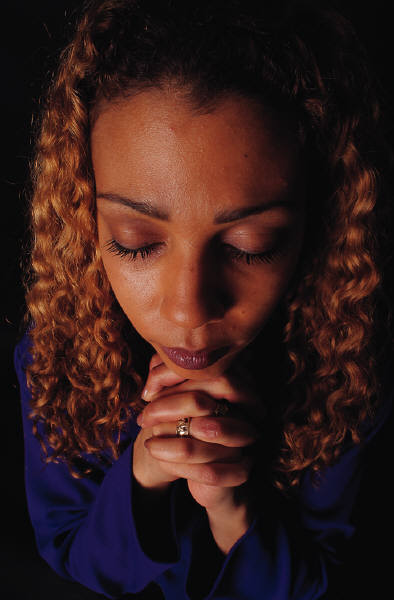
As you go through life you face stiff challenges. You find yourself in difficulties that are not easily overcome. Some of the problems that you are forced to handle appear to be overwhelming. Coping seems to be beyond your capacity in those dark moments of your life.

In the midst of some of these crises you might be tempted to wonder if you are being punished:

“Is God punishing me for some wrong that I did or for some other act of disobedience?”

“Am I paying the price for sin in my life?”

In your more buoyant and optimistic state of mind, you might look at difficult situations as challenges that you will work to overcome. You see this as a test of your faith and resolve. You think in terms of increasing your patience and commit to achieving the victory.

Which mindset is the correct one?

How can I distinguish between situations that are obstacles and those in which I am being punished by God?
Is there a difference in how I should respond to these challenges?

The fact is that we are not able to know the mind of God – except where clear precepts and principles are outlined in the Bible. We are not told when and how God will effect punishment on those of us who are living under the New Covenant.

Since we cannot tell then when punishment is being meted out to us, there is no point in focusing our energies on trying to get an answer to the “Punishment or Obstacle” question.

Here is a practical approach to handling crises and difficult times that will work for you:

1. Remember that we all fall short of what God would have us to be. (Rom 3:23 )

2. We are all required to be penitent about our short comings and to decide to correct them – the process of repentance. (Luke 13:3)

3. You then should constantly reflect on your life and its alignment with Biblical principles. Seek forgiveness and commit to making the required changes.

4. God promises that He will look favourably on persons who have penitent and contrite hearts.(Psalm 51:17 ) If you adopt that posture, you should not need to fear that God’s wrath is being poured out on you each time you encounter difficulties.

5. Having sorted out your alignment with God, you can now focus your energies on resolving the problems that confront you.

6. It helps to remember that you will not get a challenge that is greater than you are able to handle. ( 1 Cor 10:13 )

7. You are now ready to solve the problem at hand. Your first challenge is to identify what is the real problem.

8. Here are some problem solving guidelines:
a. Problem Definition: Gather as much information as you can to support why you think there is a problem. What is the evidence that things are not what they should be?

Adding the question “Why?” at each step is extremely helpful in ensuring that you identify the real problem.

b. The source of the problem: If you spend time identifying the cause of the problem you will be better able to find long term solutions. Do not be tempted to apply band aids to deep-seated problems.

c. Solutions: Take the time to examine all the approaches to solving the problem that you can identify. Evaluate each option – pros and cons – and select the most appropriate strategy for achieving your objectives.

d. Implementation: Once you have decided on the approach to solving the problem that you will take then you need to develop an Action Plan. We often have good strategies but they fail because of poor execution. The Action Plan should cover clarity about the desired outcome, the resources – human and other – that will be required, who will drive the process and how you will determine when the problem is solved.

e. Monitoring: Problems have a way of returning to bother us. You should take care to be alert to signs that the problem is about to rear its ugly head again. Your early response is likely to save you a lot of heartache.

f. Lessons learned: One way to avoid the recurrence of problems of like nature is to reflect on the lessons that you can learn from each incident. Making the same mistakes over and over is not wise.

So, how can you tell if you are being punished or just facing an obstacle?

The truth is that you can’t tell for sure because we cannot read God’s mind. However, it is not important to answer that question. Instead, you should take care to be penitent and to have a mindset that is repentant.
With that settled, you can now focus your energies on solving the problem. The step-by-step problem solving strategy outlined in this article will guide you calmly through those challenging episodes.

Young, Gifted and Christian: Questions and Answers

Young, Gifted and Christian: Questions and Answers

Author:

TrevorESSmith

Congratulations on your decision to adopt the Christian lifestyle. You are blessed to have taken the step to follow Christ early in your life.

As a young person in Christ you are likely to have many questions for which you need answers. You have a vision of a bright future but there are some dark clouds in the back of your mind that keep coming into the picture.

Here are five questions that every young Christian must think about and helpful advice about how to deal with them.

1. Will I remain faithful?

Making the decision to become a Christian is the single most important decision that you will make in your life. A feature of human behaviour is that immense doubt and reflection tend to confront us when we make major decisions. This is what marketers recognize as ‘buyer\’s remorse’ and is linked to dissonance theory.

The joy and the excitement of having taken the bold step to become a Christian are accompanied by nagging thoughts about whether you made the right decision. You may recall your ‘For eternity’ response to the question as to how long you will remain faithful. Yet, the glee with which your answer was received suggests that another response is possible. Your faithfulness till death is not guaranteed.

I want to share with you some proven strategies for helping you in living faithfully as a Christian:

Accept the fact that your doubts and fears are not surprising and is a regular occurrence. You are not alone in this and many have overcome those negative thoughts.

Your concerns are genuine and should be heeded. They are there to protect you from overconfidence and complacency.

Win the battle against the negative forces by seeking security in the constant contact with well grounded, mature Christians.

Knowledge drives out fear. Be a faithful student of the Bible and watch your confidence grow.

2. How do I manage relationships with my non-Christian friends and colleagues?

One issue that is sure to bother you is how to deal with your non-Christian friends and colleagues. The degree of difficulty that friends and colleagues present to your Christian walk is dependent on the relationships you had before you became a Christian.

Be assured about one thing. No matter what reactions you get on the surface, all right thinking individuals respect your decision to accept Jesus as Lord of your life. They may not have the courage to follow your example and peer pressure might cause them to jeer and tease. However, deep inside they appreciate your commitment and hold you in high esteem.

They key now is to ensure that they see the difference in how you lead your life. Be a witness to them by living in keeping with Christian principles.

3. Can I still have fun?

Don\’t be surprised if you feel that a decision to become a Christian is a choice to give up fun. Many have the image of a Christian as a very serious-minded individual who has decided to give up happiness.

Be assured that one fruit of the Spirit is JOY. Happy moments and the pleasures of the world are fleeting. Joy is enduring.

Here is some further advice:

3.1 Reflect on your own interests and hobbies. Things that you enjoy doing.

3.2 Seek out Christians that share those interests and work out how you will enjoy wholesome fun together.

3.3 Share with your Christian brethren the fun that can be had in pursuing your interests.

3.4 Open your mind to new opportunities for enjoyment and satisfaction.

4. What if I mess up?

As a Christian you are concerned about your salvation. You are also fully conscious that you are not perfect and that you are not free from sin.

You might even be scared stiff by this quotation from 1 John 3: 6 ‘No one who lives in him keeps on sinning. No one who continues to sin has either seen him or known him.’

God abhors sin and Christians are required to avoid wilful sinning. With that at the forefront of your mind you can take comfort in this quote from 1 John 1: 9 ‘If we confess our sins, he is faithful and just and will forgive us our sins and purify us from all unrighteousness.’

It is your attitude to sin that really matters in your Christian journey. True repentance is the answer for those times when you occasionally slip. If you genuinely regret the trespass and commit to doing your best to avoid the error in the future you will be on good grounds.

Study of God\’s word and fellowship with supportive Christians are great strategies for remaining faithful in your Christian walk and moving on to claiming Eternal Life.

5. How can I really know what God wants me to do?

Christians of all ages have to grapple with the question of God\’s Will for their lives on an ongoing basis. You will also be seeking clarity as what is your life\’s purpose and what role you are expected to play in God\’s service.

Today, God speaks to us through His word – the Bible. The surest way to feel comfortable about the choices you make is by diligent study of the Scriptures.

You can also benefit from the advice of wise and spiritually mature Christians.

Take comfort in the fact that God rewards those who diligently seek Him.

Finally, accept the encouragement of Romans 12:12 ‘Be joyful in hope, patient in affliction, faithful in prayer.’

Article Source: http://www.articlesbase.com/religion-articles/young-gifted-and-christian-questions-and-answers-4098616.html

About the Author
TrevorESSmith is an author (Success in Marriage – Amazon) and people skills & performance enhancement specialist with the Success with People Academy. He is a hands-on practitioner in the areas of Inter-personal relations, Marketing, Sales, HR and Management. He presents unique perspectives on inter-personal relationships, leadership, team building, customer service, technology & time mastery.